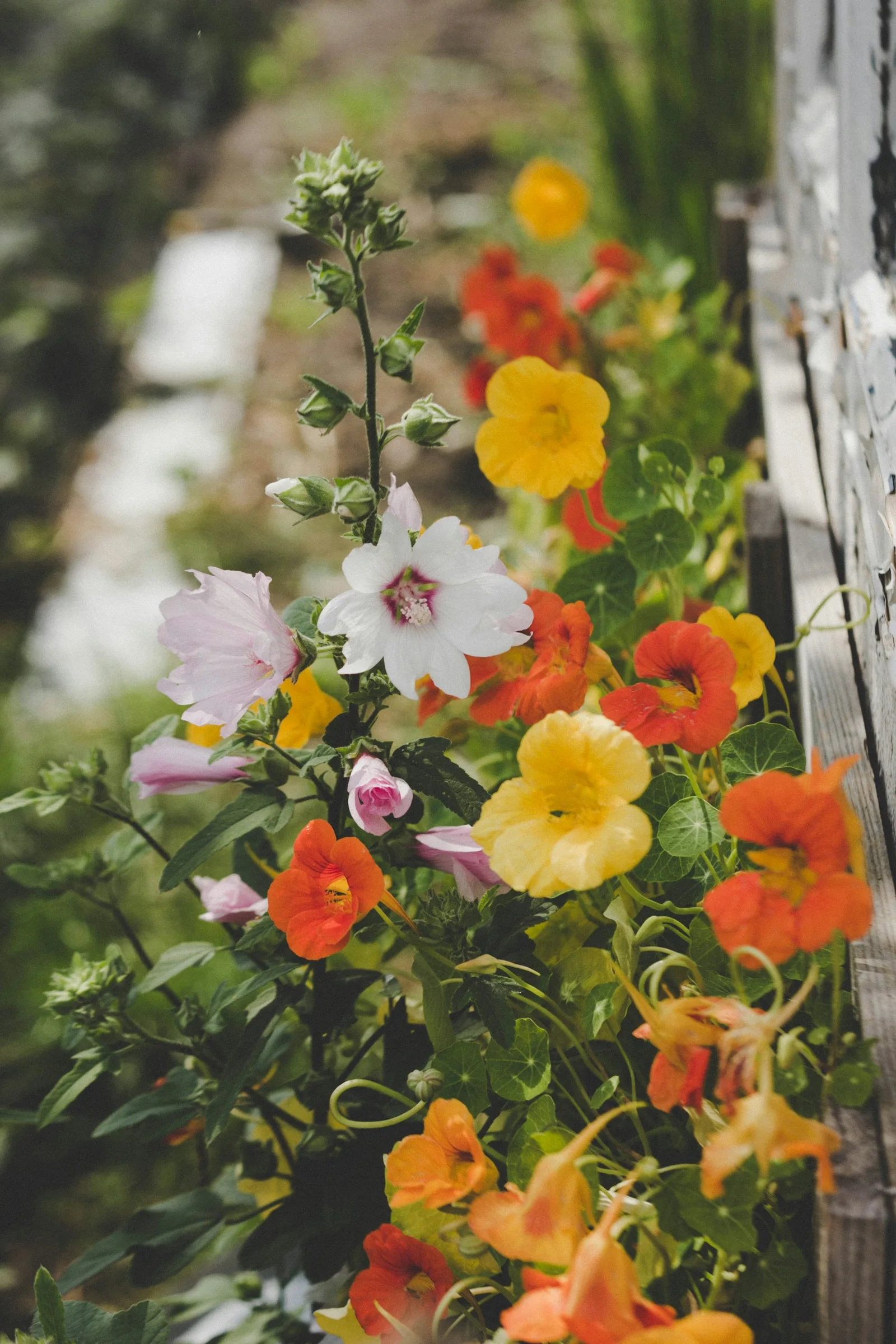
Flowers are easy to admire quickly and move past. For a learning group, one flower can instead become a place to practice detailed observation. The task is to look closely, describe what is visible, and ask questions without rushing to an answer.
Set a respectful boundary
Choose a plant that learners can observe comfortably. Decide whether it will remain on the plant or whether a permitted sample is available. Do not collect protected plants or disturb visiting insects. Provide photographs or a seated observation option when needed.
Draw what is actually there
Give learners time to sketch shapes and relative positions. Ask for labels based on what they see before introducing a reference diagram. A drawing does not need artistic polish to communicate evidence. Encourage a note such as 'I am not sure' where identification is uncertain.
Connect structure and questions
Use a reliable resource to discuss flower parts and their roles. The Edible Schoolyard's Discovering Flowers lesson is a further-reading option. Invite learners to compare the observed flower with another species rather than expecting all flowers to match one diagram exactly.
Finish by collecting unanswered questions. Which could be examined through another visit, and which need a book or expert? This distinction teaches learners how to continue an inquiry. A brief activity becomes valuable when it leaves them better able to notice detail and explain the limits of what they know.
A place to begin
- Observe without disturbing plants or insects.
- Sketch visible details before labeling.
- Keep unanswered questions for another visit.
Further reading
Independent educational resources to deepen your understanding. References do not imply an affiliation or endorsement.