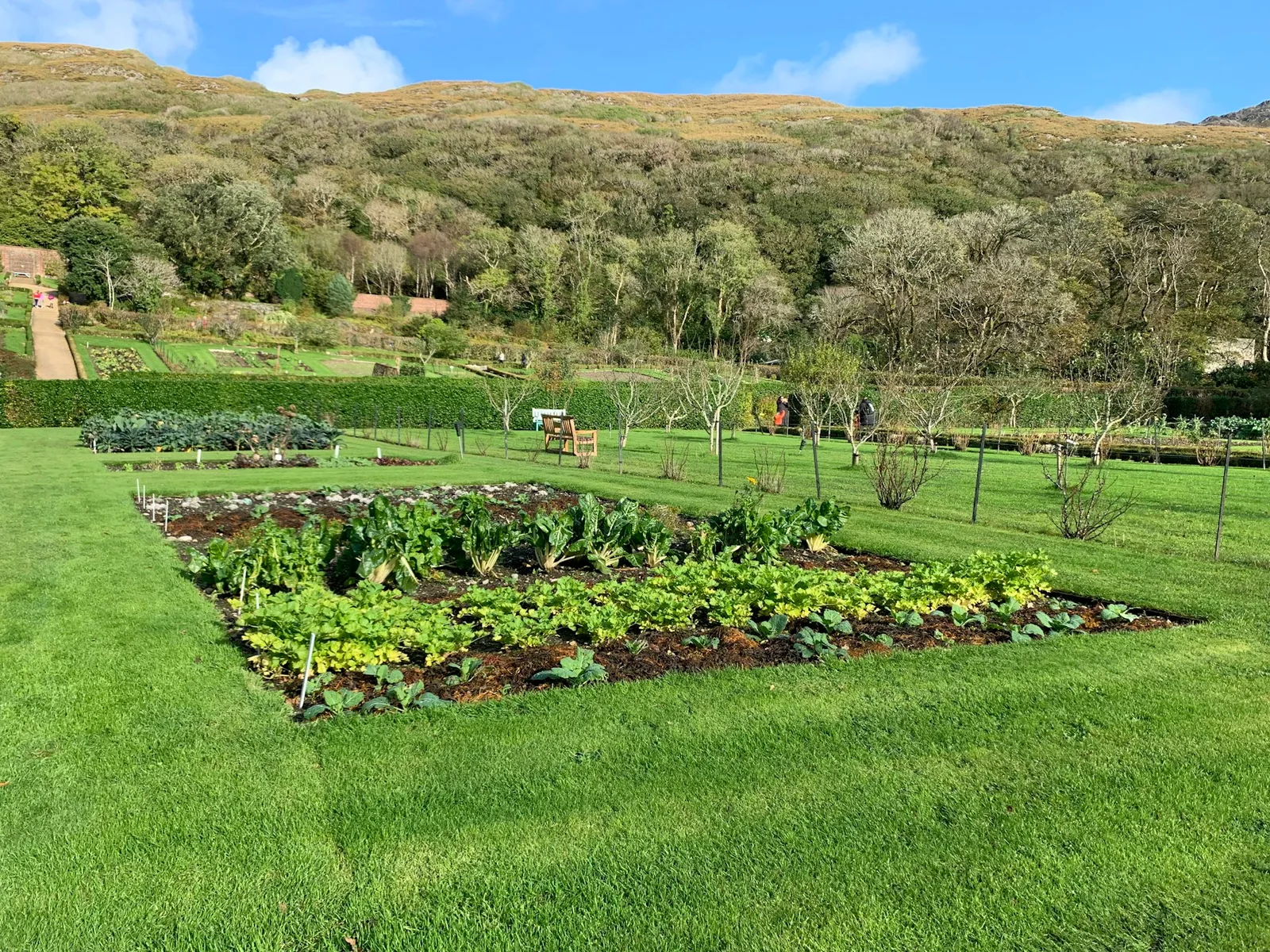
A garden does not stop at the last row of vegetables. Paths, neighboring plants, shade, fences, and water movement shape what happens inside it. Looking at the edges can open a useful conversation about how the site works as a whole.
Walk the boundary slowly
Make a sketch with learners or fellow gardeners. Mark sunny and shaded areas, flowering plants, exposed ground, and places where water gathers. Include things you do not yet understand. A question mark on a map can be more honest and useful than a confident but unsupported explanation.
Follow one relationship
Choose a single feature to revisit: a flower patch, a damp corner, or a shaded path. Observe how it changes and which organisms use it. The Edible Schoolyard's ecosystem lessons use interdependence as a lens for garden learning. You can apply that lens by asking what a plant or animal relies on nearby.
Keep the observation respectful
Stay on established routes, leave nests and shelters alone, and avoid collecting unfamiliar plants or organisms. When identifying a species, use local resources and acknowledge uncertainty. A shared photo record can support learning without removing things from their habitat.
Finish by discussing one manageable change, if any is needed. Perhaps an existing flowering edge should be retained, or a frequently trampled area needs a clearer path. Good observation does not always demand intervention. Sometimes it helps a group recognize what is already worth caring for.
A place to begin
- Sketch the garden and its boundaries.
- Revisit one feature over several weeks.
- Discuss relationships before proposing changes.
Further reading
Independent educational resources to deepen your understanding. References do not imply an affiliation or endorsement.